
Understanding Pattern Hair Loss and Scarring Hair Loss
Hair loss is a common concern, but not all hair loss is the same. Two broad categories that patients often encounter are androgenetic alopecia, commonly known as male or female pattern hair loss, and scarring alopecia, also known as cicatricial alopecia. Understanding the difference is important because these conditions behave differently and require different approaches to diagnosis and management.
At HRBR, we are seeing increasing numbers of patients presenting with scarring forms of hair loss, including frontal fibrosing alopecia (FFA) and lichen planopilaris (LPP). These conditions can sometimes be mistaken for more common pattern hair loss, but they require careful assessment because inflammation can permanently damage the hair follicle.
What is androgenetic alopecia?
Androgenetic alopecia is the most common form of hair loss. It is genetic and influenced by hormones, particularly dihydrotestosterone (DHT). In women, it typically presents as gradual thinning over the crown and top of the scalp, often with a widening parting, while the frontal hairline is usually maintained. In men, it commonly causes recession at the temples and thinning at the crown.
Pattern hair loss is non-scarring, meaning the hair follicles remain alive, although the hairs may become progressively finer or miniaturised over time. It usually develops gradually over years and is not typically associated with scalp redness, scaling, burning, itching or tenderness.
What is scarring alopecia?
Scarring alopecia refers to a group of inflammatory conditions where inflammation damages the hair follicle and replaces it with scar tissue. Once a follicle has been destroyed, hair cannot regrow from that area, which is why early diagnosis and appropriate medical management are so important.
Scarring alopecia may present with a changing or receding hairline, patchy hair loss, eyebrow thinning, scalp redness, scaling, itching, burning, tenderness, or a smooth shiny appearance of affected skin. In some cases, symptoms are mild or absent, which can delay diagnosis.
Frontal fibrosing alopecia and lichen planopilaris
Frontal fibrosing alopecia (FFA) and lichen planopilaris (LPP) are two related forms of scarring alopecia. Both involve inflammation around the hair follicles, which can lead to permanent hair loss if the condition is not recognised and treated early.
FFA most commonly affects the front and sides of the hairline and is often associated with eyebrow loss. It is seen more frequently in post-menopausal women, although it can occur in younger women and in men. LPP usually presents as patchy areas of hair loss on the scalp, often with redness, scaling, itching, burning or tenderness.
Pattern hair loss versus scarring hair loss
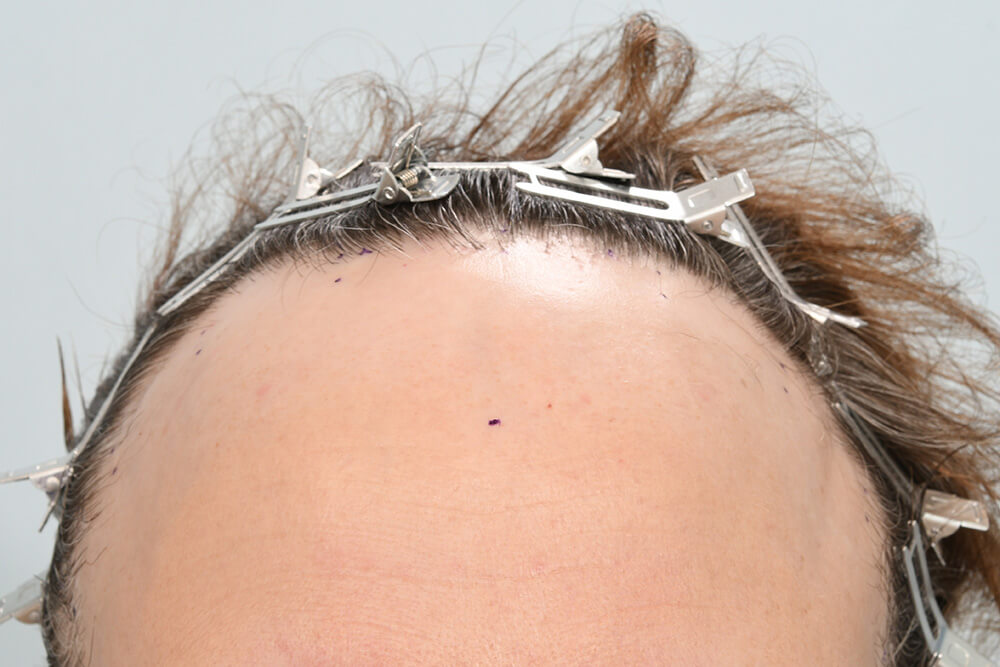
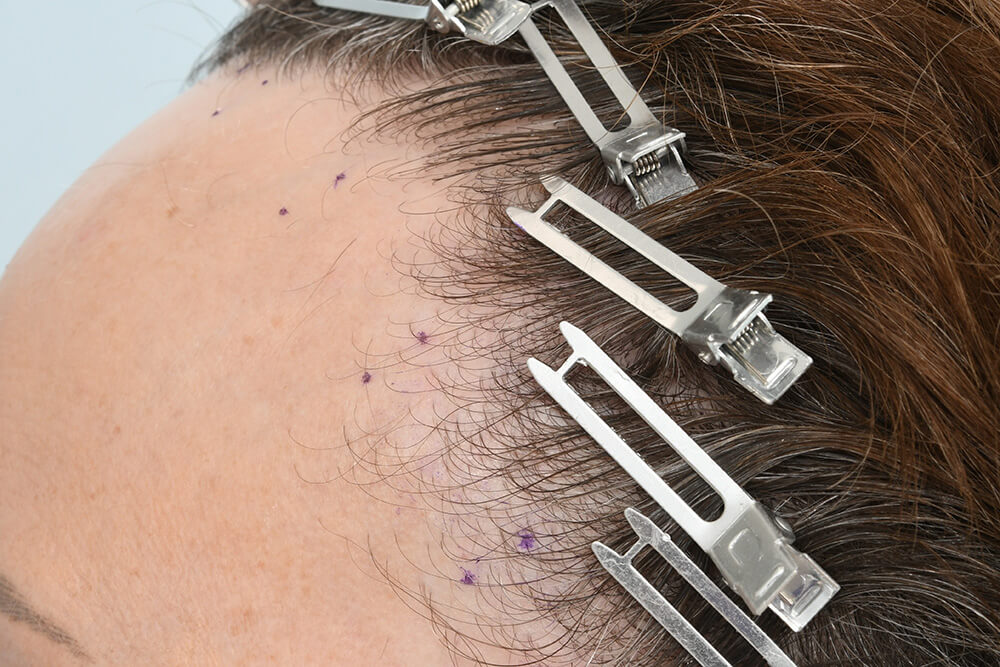
There are some practical differences that may help patients recognise when specialist assessment is needed. In female pattern hair loss, the hairline is usually maintained, while in FFA there may be a visible and often uniform band of recession at the front or sides of the scalp. Pattern hair loss usually causes gradual thinning without redness, scaling or discomfort. Scarring alopecia is more likely to be associated with symptoms such as itching, burning, tenderness, redness, scaling, eyebrow loss or shiny skin in the affected area.
The pattern of hair loss can also differ. Androgenetic alopecia often causes diffuse thinning over the crown or top of the scalp in women, and temple or crown recession in men. Scarring alopecia may appear as a receding frontal hairline, patchy hair loss, or areas where the scalp looks smooth because the follicles have been damaged.
Diagnosis, treatment and hair transplantation of scarring hair loss
A careful assessment by an experienced clinician is essential. This may include close scalp examination, trichoscopy and, where required, referral for a scalp biopsy. The aim is to identify whether inflammation is active and to guide the most appropriate treatment plan.
Treatment for FFA and LPP focuses on controlling inflammation and slowing or stopping further hair loss. Treatment is individualised and may involve topical, injected or oral medications, depending on the diagnosis and level of disease activity.
Hair transplantation is generally not recommended when scarring alopecia is active. The scalp environment may not support transplanted grafts, and surgery may worsen inflammation. In selected cases, transplantation may be considered only when the condition has been stable for a significant period, and even then results can be less predictable than in pattern hair loss.
When to seek advice
If you notice a receding hairline, patchy hair loss, eyebrow thinning, scalp redness, scaling, itching, burning or tenderness, it is important to seek medical advice promptly from an appropriate healthcare professional. Early diagnosis is particularly important in scarring alopecia, as treatment aims to stop progression rather than reverse existing loss.
HRBR’s approach
At HRBR, our priority is accurate diagnosis before any treatment recommendation. Not all hair loss is suitable for transplantation, and identifying scarring alopecia early can help protect remaining hair and avoid inappropriate procedures. Where scarring alopecia is suspected, patients may need dermatology-led assessment and management.
Further reading from Dr Wall
- Statement from the frontal fibrosing alopecia international expert alliance: SOFFIA 2024 1 Feb 2026Journal of the European Academy of Dermatology and Venereology40(2):210-223. https://dx.doi.org/10.1111/jdv.20833
- Management of classic lichen planopilaris: The EADV task force on hair diseases position statement. 1 Jan 2026Journal of the European Academy of Dermatology and Venereology. Co-authors:Seyed Jafari SM, Starace M, Katoulis A…20 more https://dx.doi.org/10.1111/jdv.70379
About the Author

Dr Dmitri Wall
Medical Director, Consultant Dermatologist and Hair Transplant Surgeon
MB BCh BAO RCP
Dr Dmitri Wall is Medical Director at Hair Restoration Blackrock, a consultant Dermatologist, Hair Transplant Surgeon (International Society of Hair Restoration Surgery member) and hair researcher. He has received internationally recognised subspecialist training in hair and scalp disorders, is an active publisher of research papers in international journals, and an Associate Professor in the University College Dublin, School of Medicine.